Agadir weather at a glance
Agadir sits on the Atlantic coast of southern Morocco. The numbers on this page are long-term averages for 1991–2020 from the Moroccan national weather service, published through the World Meteorological Organization for the station at Agadir Inezgane. They describe what is typical, not what will happen on your dates.
The pattern is easy to remember. Summer is warm and almost completely dry. Winter is mild, with the highest rainfall in November and December. Spring and early autumn sit in between. Even in the coolest month the average daytime high is above 21 °C, but nights in January fall to about 8 °C, so pack a layer for the evenings.
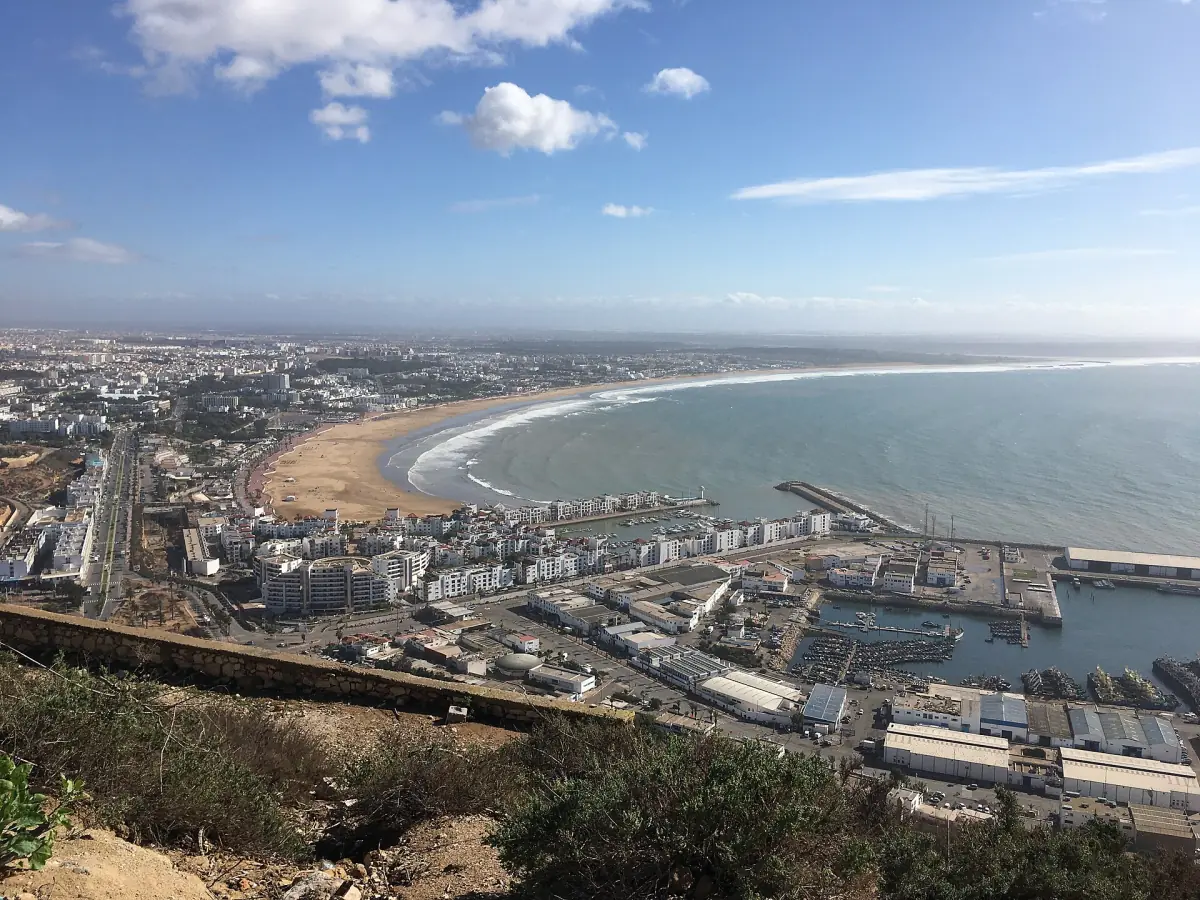
Agadir temperature and rainfall by month
Average daily high and low in °C, and average monthly rainfall in millimeters, 1991–2020.
| Month | High °C | Low °C | Rain mm |
|---|---|---|---|
| January | 21.1 | 8.4 | 31.6 |
| February | 22.0 | 10.2 | 28.6 |
| March | 23.4 | 12.3 | 31.3 |
| April | 23.2 | 14.1 | 13.8 |
| May | 24.2 | 15.9 | 5.4 |
| June | 25.6 | 18.1 | 0.8 |
| July | 26.7 | 19.2 | 0.2 |
| August | 27.0 | 19.5 | 3.1 |
| September | 26.1 | 18.6 | 3.7 |
| October | 26.1 | 16.7 | 21.2 |
| November | 24.1 | 12.9 | 42.3 |
| December | 22.1 | 10.1 | 47.4 |
Added up, the monthly figures come to roughly 229 mm of rain a year. Averages are not limits: a single day can be warmer, cooler or wetter than the table suggests. Check a forecast a few days before you travel.
Day trips and tours from Agadir
Boat trips, quad rides, coast and mountain excursions and visits to nearby towns, with live prices and availability.
The four seasons in Agadir
What the averages mean for a normal week on the coast.
Winter: December to February
Daytime highs are 21–22 °C and lows are 8–10 °C. December is the wettest month with 47.4 mm, January and February bring about 30 mm each. This is the season for walking the promenade and visiting the Kasbah and the souk in comfortable temperatures. Bring a light jacket for the evening.
Spring: March to May
Highs rise from 23.4 °C in March to 24.2 °C in May, and lows from 12 °C to 16 °C. Rainfall drops quickly, from 31.3 mm in March to 5.4 mm in May. April and May are a good balance of mild days and little rain.
Summer: June to September
Highs are 25.6–27.0 °C and lows 18–19 °C. June and July are almost dry, with 0.8 mm and 0.2 mm on average. This is the warmest stretch of the year and the usual choice for a beach holiday. Use sun protection and drink water through the day.
Autumn: October and November
October still averages a 26.1 °C high, but rain returns with 21.2 mm. November falls to 24.1 °C and 42.3 mm. Showers can arrive suddenly, so look at the forecast before a day outside the city.
Best time to visit Agadir by plan
No month suits everything, so start from what you want to do.
Beach days
June to September has the warmest air and almost no rain. Read the safety notes on the beach page before you swim, because strong currents are a risk on Moroccan beaches in any month.
Sightseeing
The Kasbah hill, the souk and the museum involve a lot of walking and some exposure to the sun. Spring and the cooler months are easier than midsummer afternoons. See the Kasbah guide and the Souk El Had guide for opening details.
Hiking and Paradise Valley
The regional tourism board describes nearly empty pools in summer and recommends spring or autumn. Heavy rain can cause sudden floods in mountain valleys, so avoid river valleys after storms. Details are on the Paradise Valley page.
A flexible, quiet trip
If you want mild weather and are happy to accept some rain, February to May and October are worth a look. Rainfall in those months ranges from 5.4 mm in May to 31.3 mm in March.
Sunshine and what to pack
Practical points that follow from the climate.
Morocco's national tourism office speaks of around 300 sunny days a year. That is a general tourism figure and not a meteorological statistic, so treat it as a sign that sunshine is common, not as a promise. You will still want a hat, sunglasses and sunscreen in every season.
For a visit between December and March, add a warm layer and a rain jacket. For June to September, light clothes and a water bottle matter more.
For the trip from the airport into town, see the Agadir airport guide. If you are still choosing a base, the where to stay page compares the main areas.
Plan around the weather
Pages that depend most on the season.


Agadir weather: frequently asked questions
When is the best time to visit Agadir?
It depends on your plan. For the beach, June to September is the warmest and driest period. For sightseeing, the milder months from February to May are comfortable. There is no month without some trade-off, so choose by activity.
Does it rain in Agadir in summer?
Very little. The 1991–2020 averages are 0.8 mm in June, 0.2 mm in July, 3.1 mm in August and 3.7 mm in September. Rain is much more common from October to March.
Which month is the wettest?
December, with an average of 47.4 mm, followed by November with 42.3 mm. January, February and March each average about 30 mm.
How hot does Agadir get?
August is the warmest month, with an average high of 27.0 °C and an average low of 19.5 °C. These are averages, and individual days can be hotter.
Is Agadir cold in winter?
Days are mild, with average highs of 21.1 °C in January and 22.0 °C in February. Nights are cooler, with average lows of 8.4 °C in January. A light jacket or sweater is enough for most visitors.
Are these figures a forecast?
No. They are long-term averages for 1991–2020 from the station at Agadir Inezgane. Use them to plan the season, and check a current forecast before you leave.